QUILLY
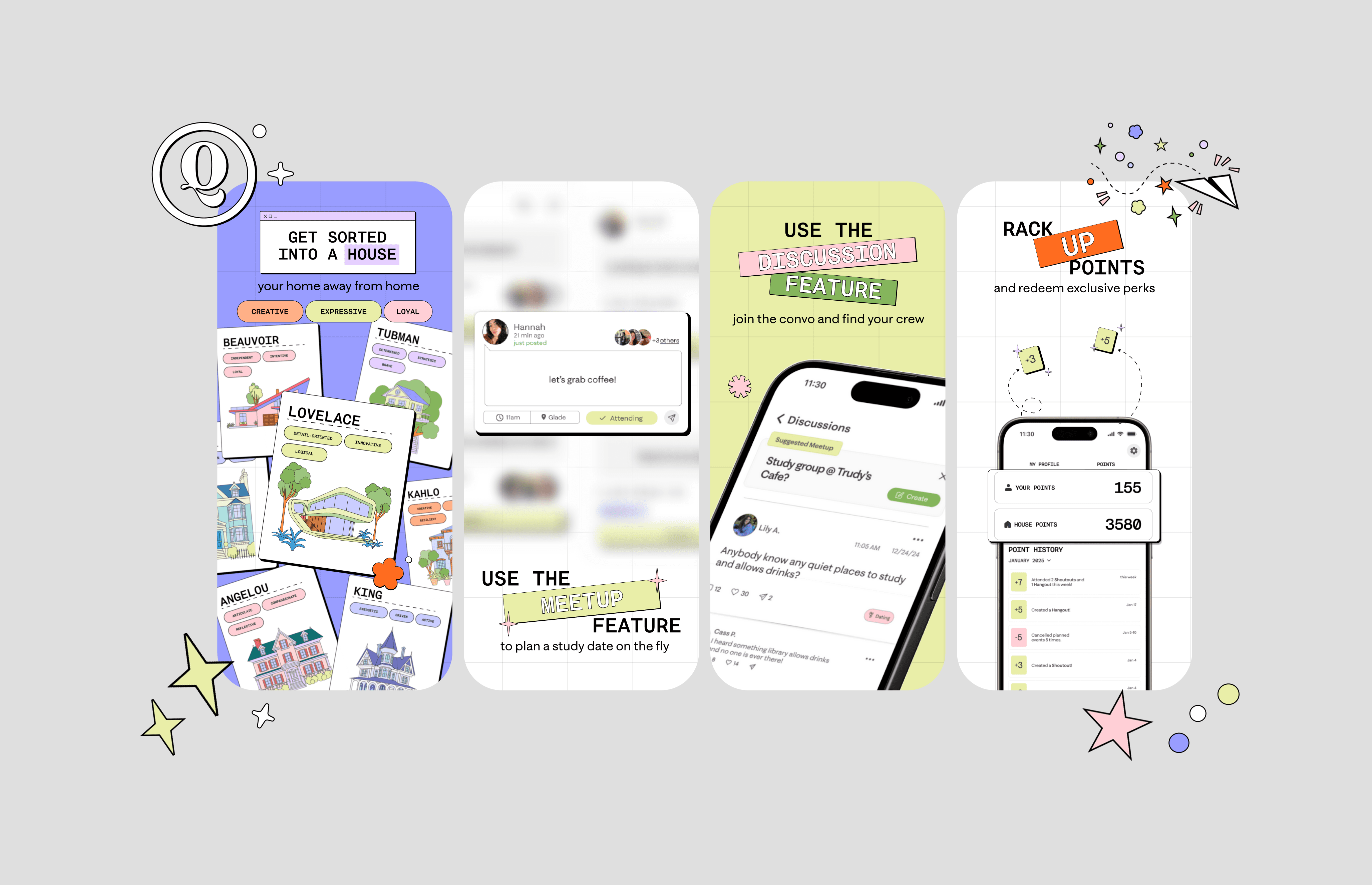
Quilly is an AI-powered social platform created to reflect the way Gen Z builds relationships in digital-first environments. It focuses on helping college students form real friendships through spontaneous hangouts, planned events, and community-based “houses.” I joined Quilly as the product designer on the beta app team. My focus was to rethink how the platform could help students move beyond online chats and toward meaningful offline interaction.
My role
Product Designer
Team
Danielle (PM), Darcy (Designer), Daphne (Designer), Hannah (Founder), Dev Team
Year
Summer 2025
The Problem
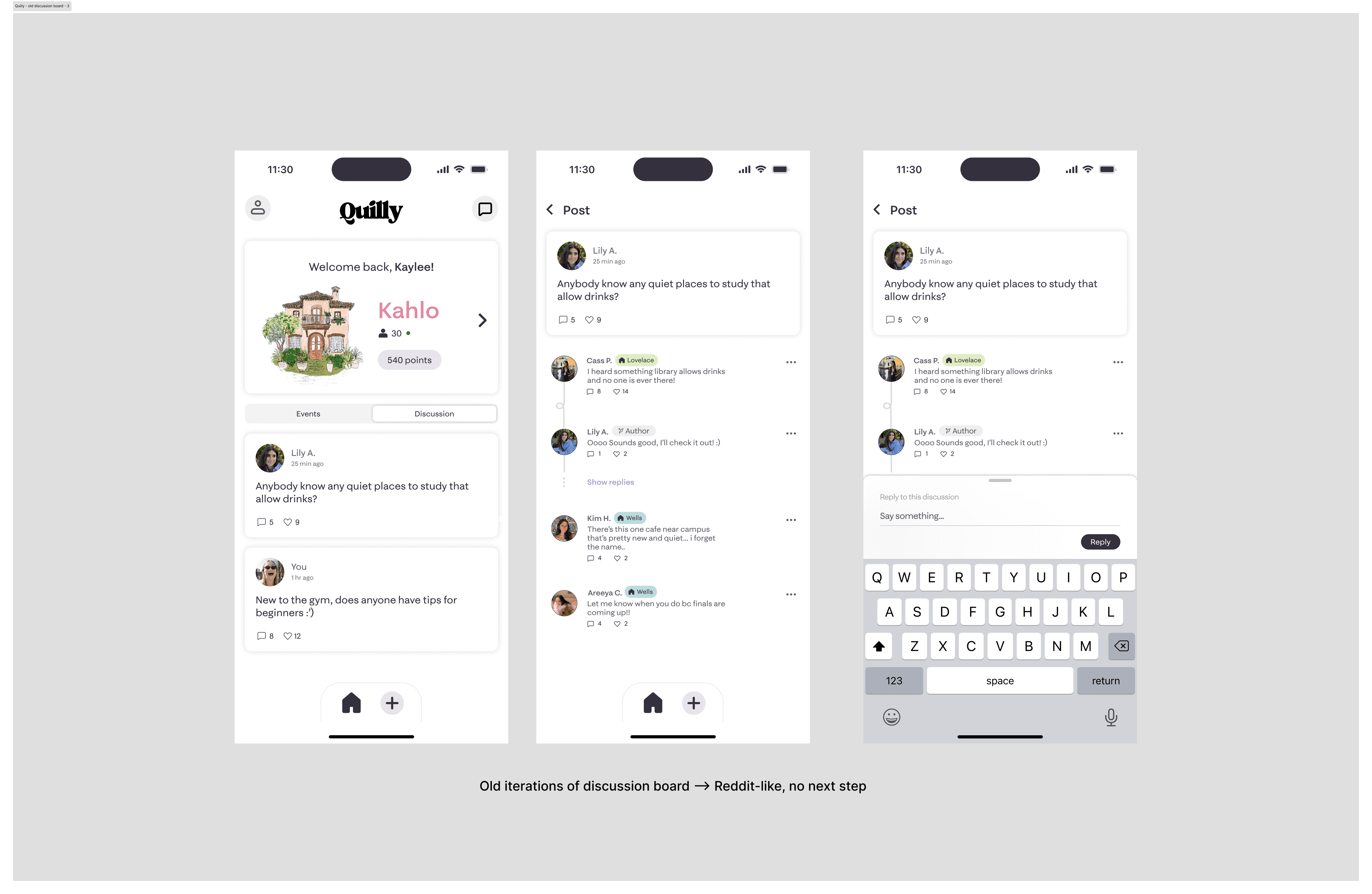
The original Discussions feature was not aligned with Quilly’s mission. It encouraged passive engagement, with conversations that lacked direction and no clear path toward in-person connection.
This raised an important question: How might we design the 'discussion' feature to naturally lead users toward in-person meetups?
Insight
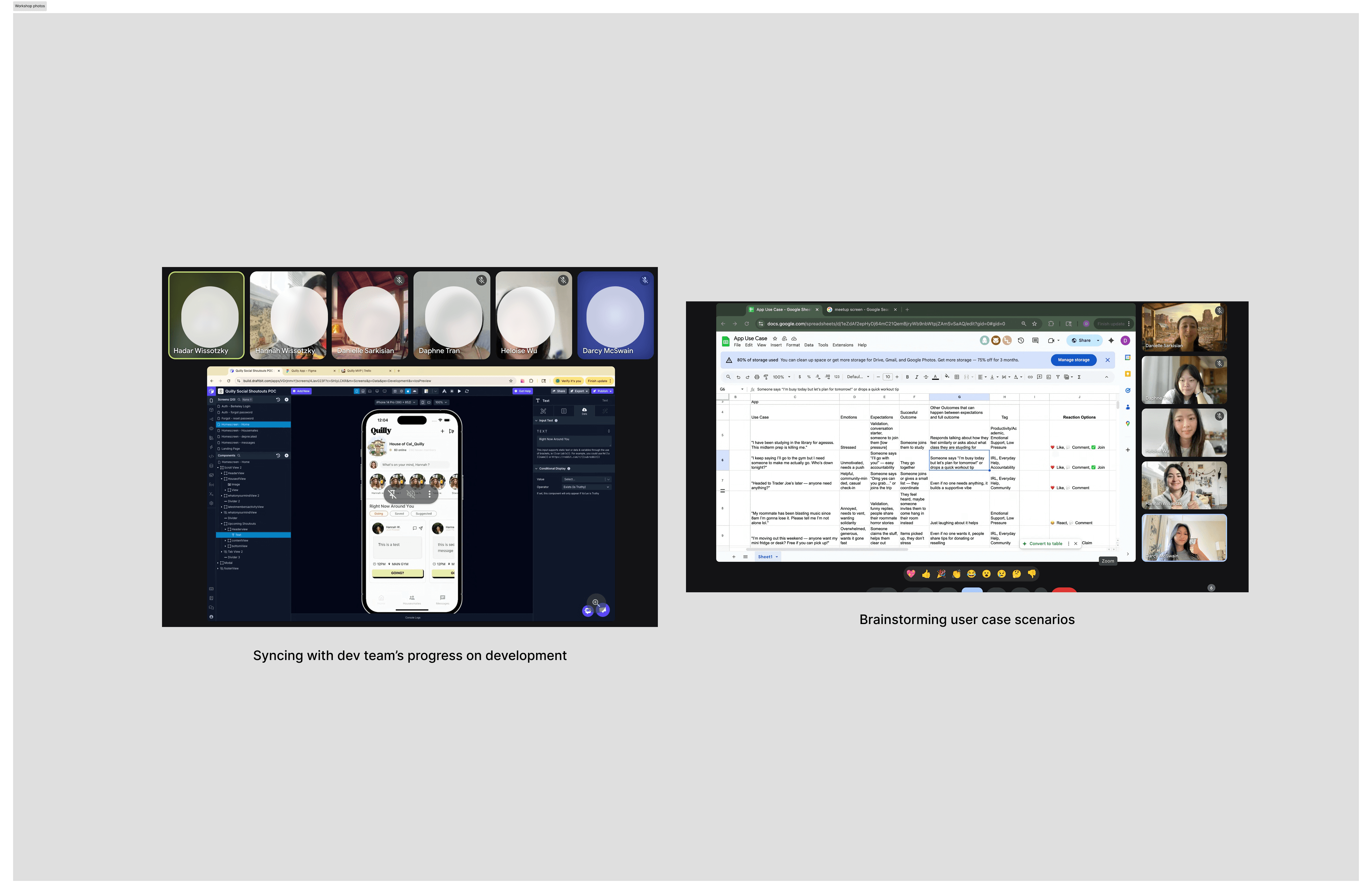
While designing early iterations of the Discussions experience, I brought this question to the team. That sparked a workshop involving the founders, advisors, and developers. Together, we began rethinking what Discussions were meant to do.
We landed on two core insights:
Trust and comfort are essential. Students will only meet up if they feel safe and at ease.
The process needs to be simple. If it takes more than a few taps or feels intimidating, they won’t follow through.
This workshop reframed our approach. Discussions should not be the end of the journey. They should be a starting point.
Design
Goal: Make the transition from an online conversation to an in-person meetup easy, natural, and effortless.
What I designed
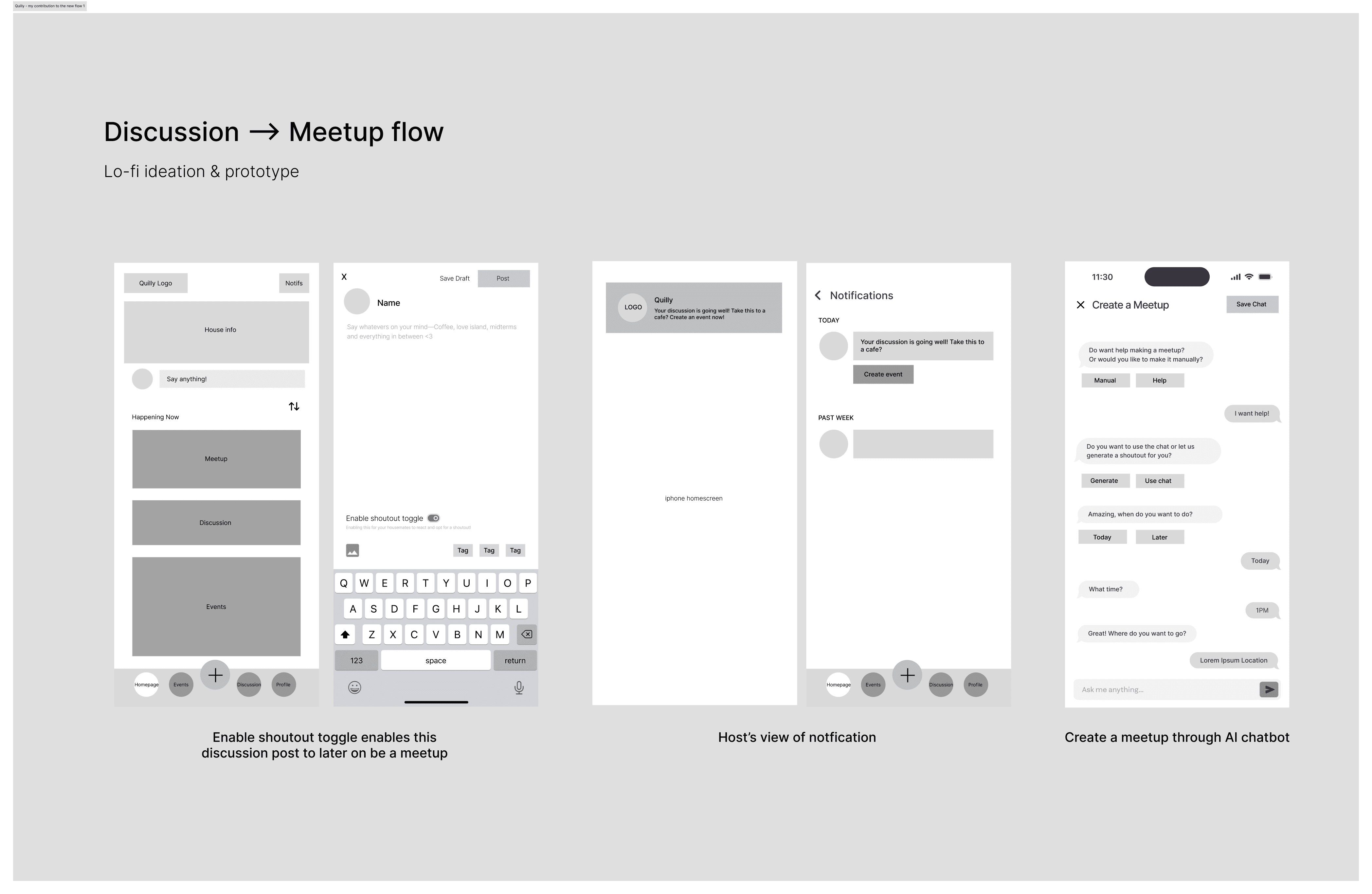
1. Multiple entry points from Discussions
I introduced a few lightweight ways for users to take action from within a conversation, including:
A quick-post button embedded inside each thread
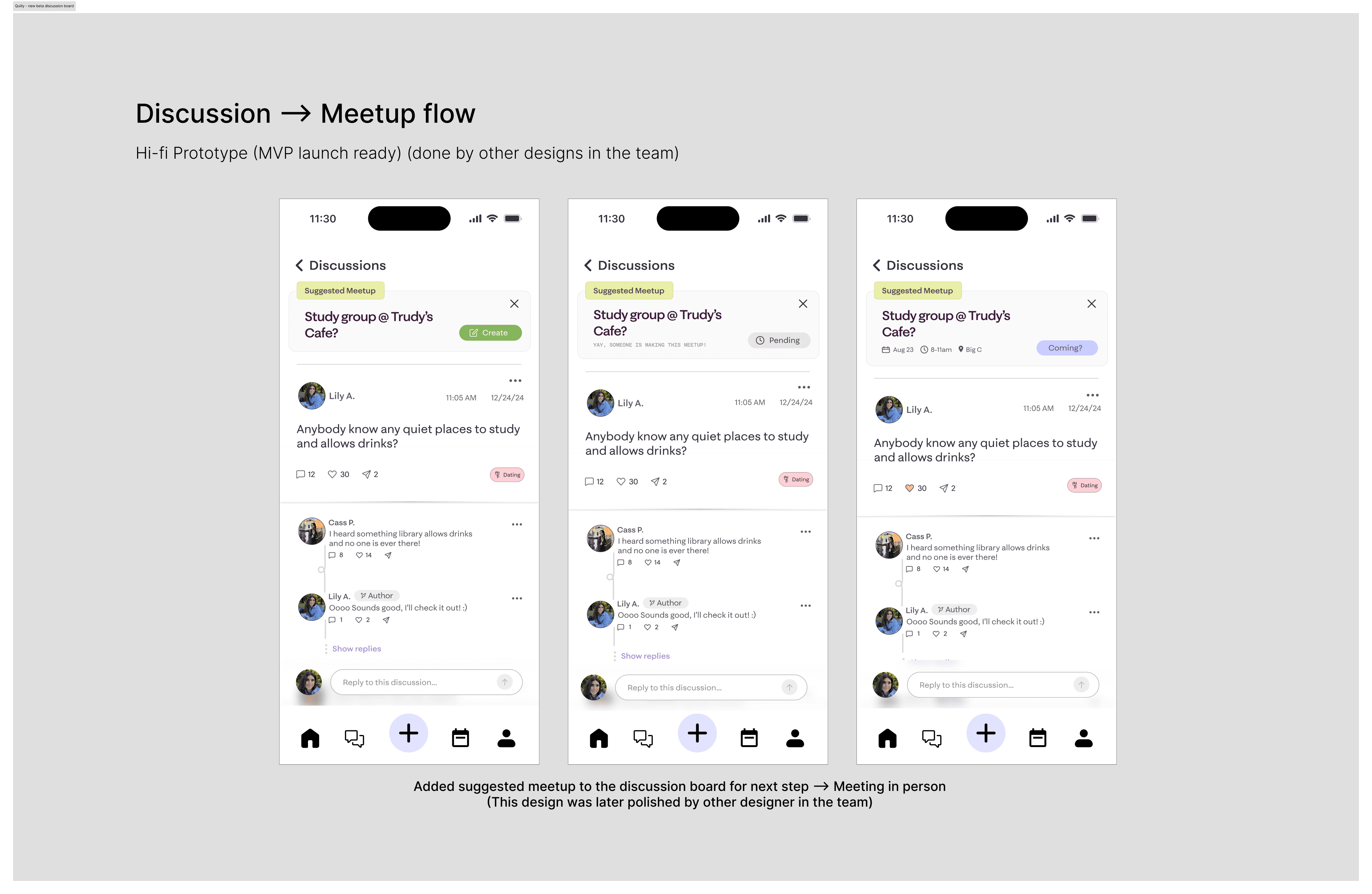
A toggle that lets users instantly turn a discussion into a meetup
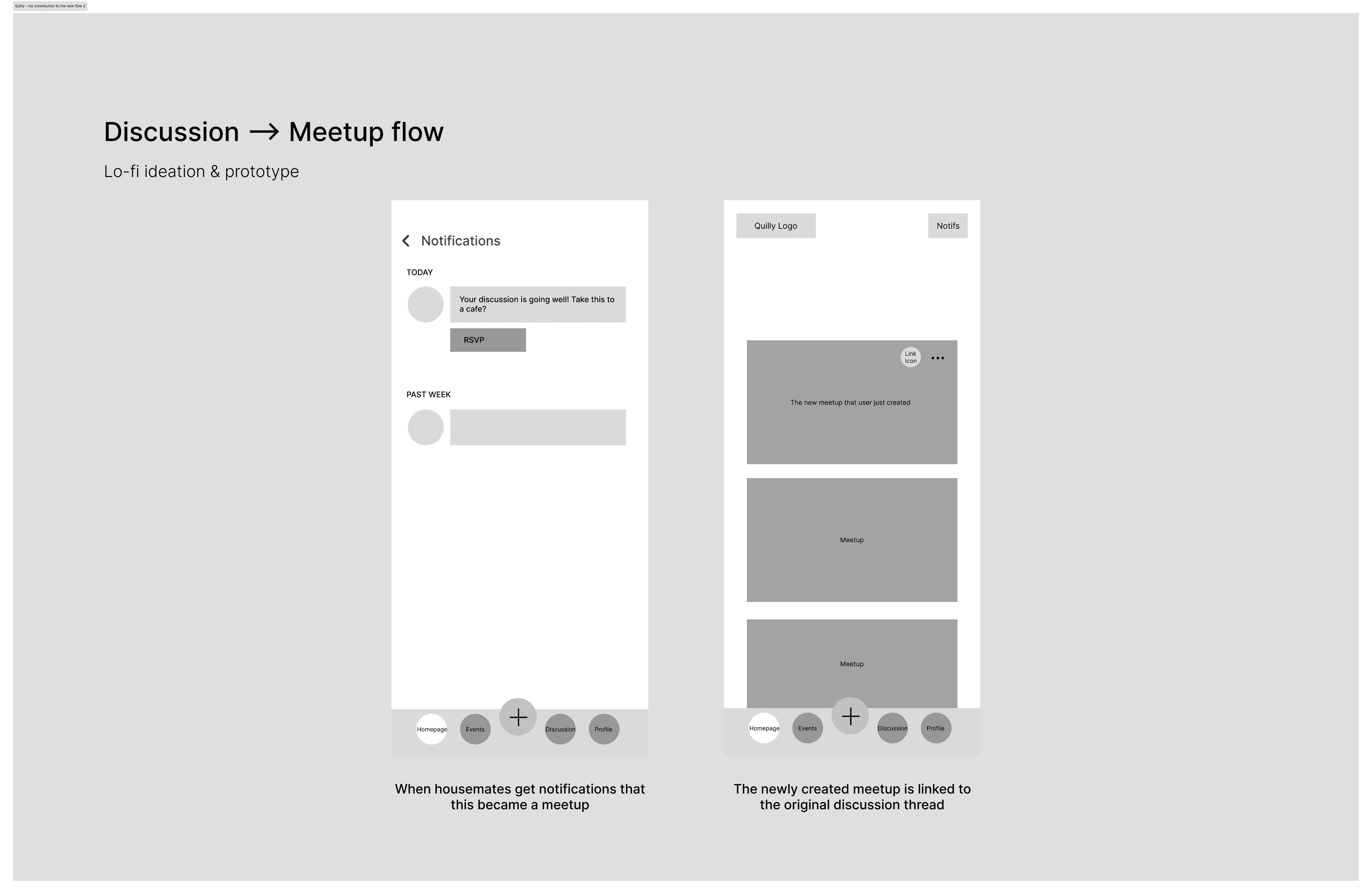
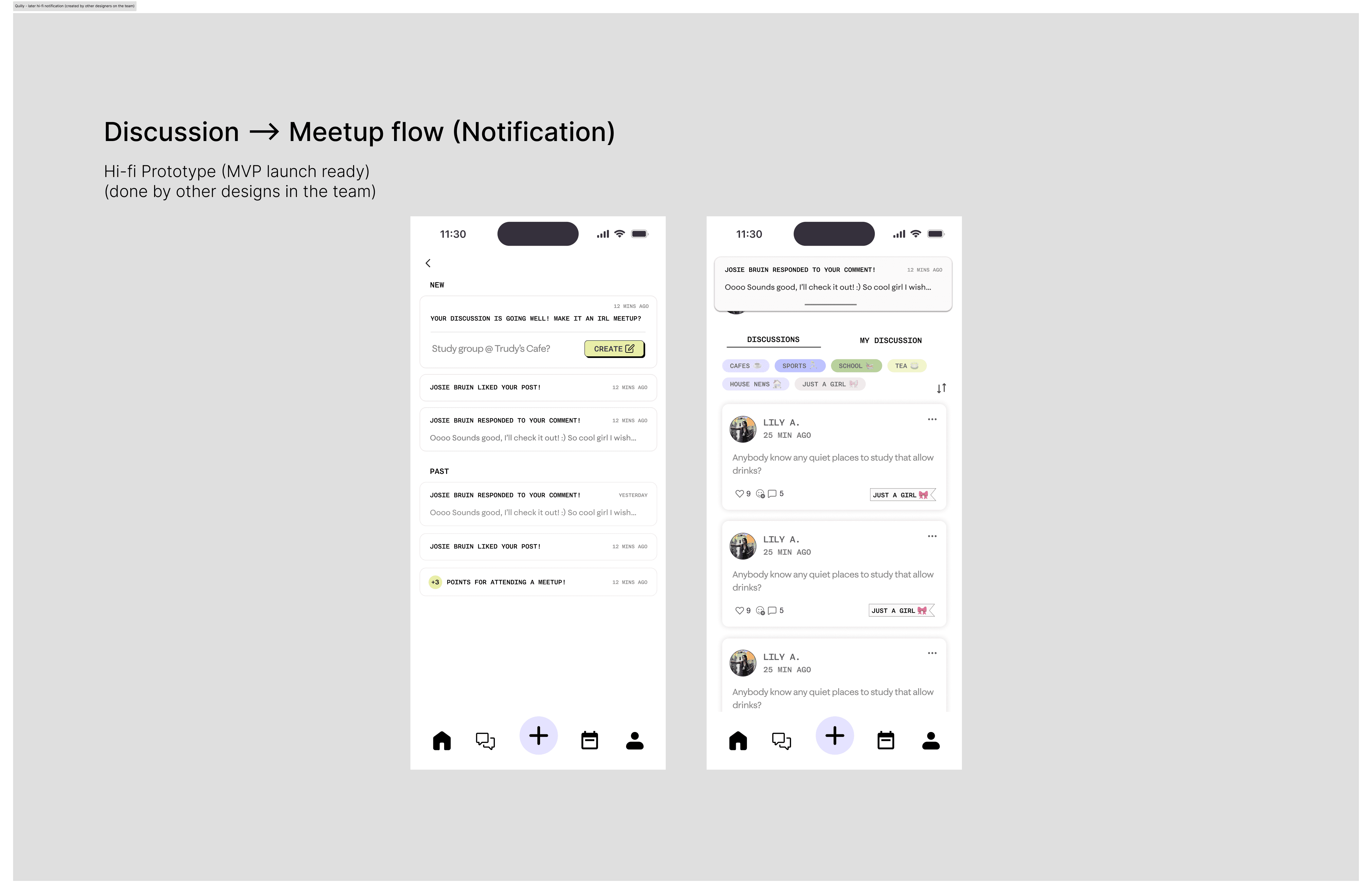
Smart notifications that prompt users to create a meetup when a thread gains momentum
2. An AI-assisted flow for speed
To remove friction and hesitation, I designed a version of the Meetup flow powered by AI. With one tap, users could convert a discussion thread into a meetup, with key event details like time, location, and invite list pre-filled by the system. Users could edit these suggestions, but the goal was to reduce decision fatigue and make it feel effortless.
Results
What I delivered by the end of the project:
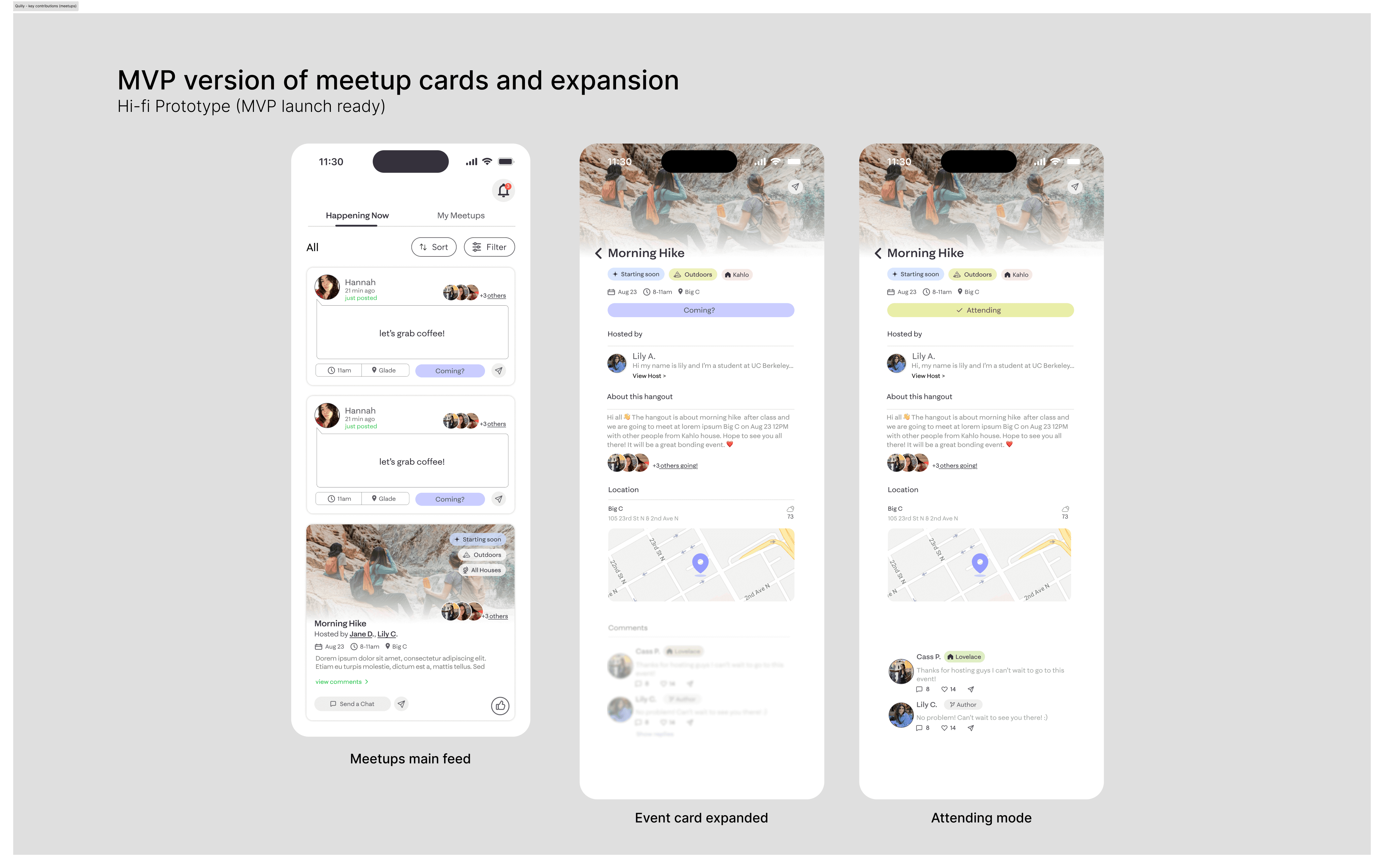
A complete Meetup flow that connected Discussions with in-person engagement
Three low-friction entry points from threads into the Meetup experience
A unified product requirement document that aligned product and engineering teams
Design specs that accelerated the development timeline
Reflection
This project taught me how asking the right question can shift a product’s trajectory. I grew from executing UI tasks to contributing at the product strategy level, helping the team rethink how Quilly could deliver on its mission.
I also learned how to balance startup constraints (reusing the old UI system) with user needs (clearer flows, offline connections). Most importantly, I saw how design can bridge execution, strategy, and collaboration to deliver meaningful impact.